

Business Intelligence (BI) is the set of strategies, technologies, and processes that transform your company's raw data into useful information for making better decisions. It's not a concept reserved for large multinationals: today, even small and medium-sized enterprises (SMEs) can — and should — leverage BI to stay competitive.
If you've ever found yourself making decisions "by gut feeling" because you didn't have clear data at hand, this article is for you. Let's take a detailed look at what BI means, how it works, and why it could be a game-changer for your business.
Definition of Business Intelligence
Business Intelligence encompasses all activities related to collecting, integrating, analyzing, and presenting business data. The goal is simple: transform scattered numbers across Excel spreadsheets, databases, and management systems into intuitive dashboards and reports that tell you what's happening in your business.
In practice, BI answers questions like:
- What are my best-selling products in the last 3 months?
- Which sales channel generates the best margin?
- How is revenue performing compared to the same period last year?
- Which customers are buying less than usual?
Without BI, these answers require hours of manual work on spreadsheets. With BI, they're available in real-time with a single click.
How a Business Intelligence system works
A BI system follows a precise flow, even though end users don't perceive its complexity:
- Data collection: data is extracted from business sources — ERP, e-commerce, CRM, Excel spreadsheets, databases
- Integration and cleaning: data is unified, standardized, and cleaned of errors and duplicates
- Storage: clean data is stored in a data warehouse optimized for analysis
- Analysis: calculations, aggregations, and comparisons are applied to extract meaningful insights
- Visualization: results are presented in interactive dashboards, charts, and reports
All of this happens automatically and continuously. You open the dashboard and find updated data, ready to be read.
Why BI is essential for SMEs
Many business owners think Business Intelligence is "big company stuff." In reality, SMEs benefit the most, for several reasons:
- Limited resources: you can't afford to make wrong important decisions. BI gives you data certainty
- Speed: the market changes rapidly. Having real-time data lets you react immediately
- Competitiveness: your competitors using data are already overtaking you
- Growth: to scale, you need to understand what works and what doesn't. BI tells you clearly
With modern SaaS tools, massive investments are no longer needed. Solutions like Leviathan BI start at €20/month per user and can be set up in just a few hours.
Concrete benefits of Business Intelligence
Let's look at the most tangible benefits that BI brings to a company:
Data-driven decisions
No more gut-feeling decisions. With BI, every choice is supported by real numbers. This drastically reduces the risk of error.
Time savings
How many hours do you spend each week preparing manual reports? BI automates everything. Reports that used to take half a day are ready instantly.
Identifying opportunities and problems
BI reveals hidden patterns in data. A sales drop in a specific area, a product with declining margins, a customer about to leave: BI flags it before it becomes a problem.
Team alignment
When everyone looks at the same data, discussions become more productive. No more "I think" versus "you think": the numbers speak for themselves.
Business Intelligence vs Excel spreadsheets
Excel is an exceptional tool, but it's not built for structured data analysis. Here are the main differences:
| Feature | Excel | Business Intelligence |
|---|---|---|
| Data updates | Manual | Automatic |
| Data sources | Single file | Multiple integrated sources |
| Collaboration | Difficult | Shared dashboards |
| Data volume | Row limits | Millions of records |
| Human errors | Frequent | Eliminated |
| Visualization | Basic charts | Interactive dashboards |
It's not about abandoning Excel, but using the right tool for each task. For structured and ongoing data analysis, BI is simply more effective.
How to get started with Business Intelligence
If you've never used a BI system, here are the steps to get started:
- Identify key questions: what information do you need every day to manage your business? Revenue, margins, sales trends, product performance?
- Map your data sources: where is your data today? ERP, e-commerce, Excel spreadsheets, CRM?
- Choose the right tool: for an SME, a cloud-based SaaS tool is the best choice. No servers to manage, no complex installations
- Set up dashboards: define the KPIs you want to monitor and create your first dashboards
- Train your team: make sure those who need to use BI know how to read the data
With Leviathan BI, you can complete these steps in a single day. Our team supports you through initial setup and training.
Recommended reading
To dive deeper into the topics covered in this guide, check out our dedicated articles:
- Business Intelligence for SMEs: practical guide to getting started
- Business Intelligence dashboards: how to create and use them
- Sales and commercial KPIs: which ones to monitor in your SME
- BI tools: comparison and selection guide
- Cloud Business Intelligence: benefits for SMEs
- BI for e-commerce: analyzing your online shop data
Practical examples of Business Intelligence in SMEs
To better understand, here are some Business Intelligence examples applied to real SMEs:
- Clothing e-commerce: dashboard showing sales by category, best-selling size by region, return rate by product. Result: smarter reorders, less unsold stock
- B2B company with field agents: dashboard with revenue by agent, new customers acquired, budget variance, and integrated marketing KPIs. Result: targeted incentives, uncovered territories identified
- Store with e-commerce: unified analysis of physical + online sales, margin comparison by channel, best sellers by period. Result: optimized promotions, balanced stock
- Manufacturing company: production monitoring, waste, delivery times, margin per job. Result: bottlenecks eliminated, more accurate quotes
In all these cases, BI didn't require a dedicated IT department: just the right BI tool for SMEs and the data the company already has.
Conclusion
Business Intelligence is no longer a luxury reserved for enterprises. It's an accessible, powerful tool that — in 2026 — is absolutely necessary for any SME that wants to make informed decisions and grow sustainably.
If you want to see how BI can work for your business, contact us for a personalized demo or try the free demo.
Related articles
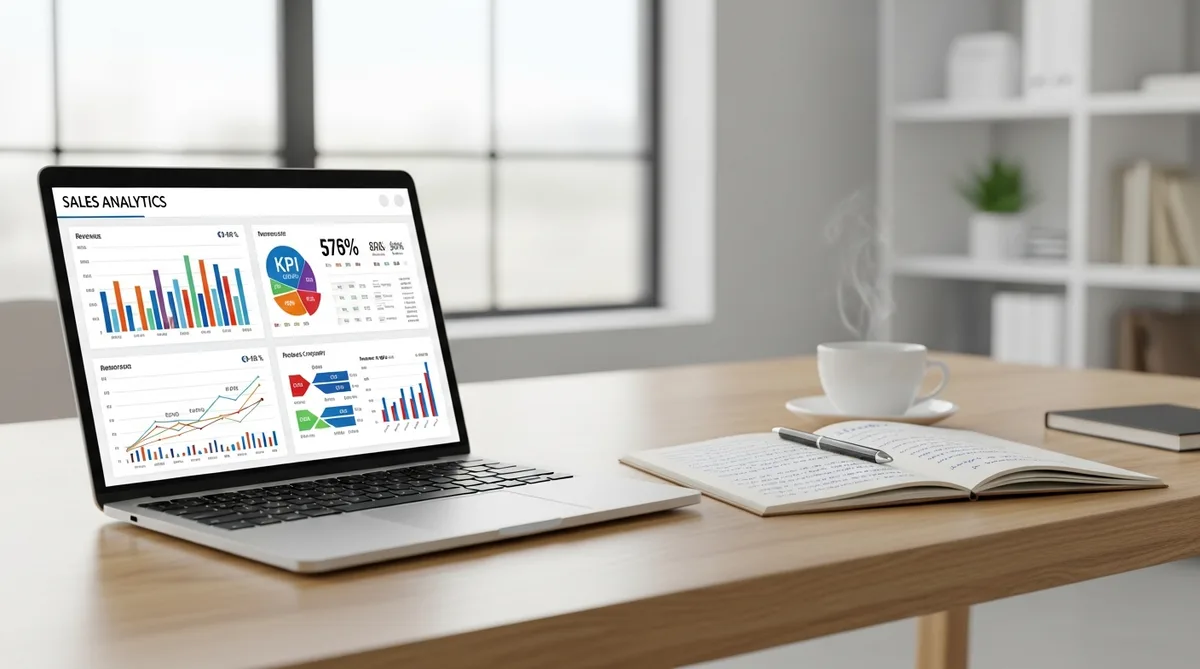
Sales Analysis for SMEs: A Practical 5-Step Guide
How to analyze your SME sales in 5 practical steps: from data collection to segmentation, from trend analysis to concrete actions. Method, tools, and ready-to-use templates.
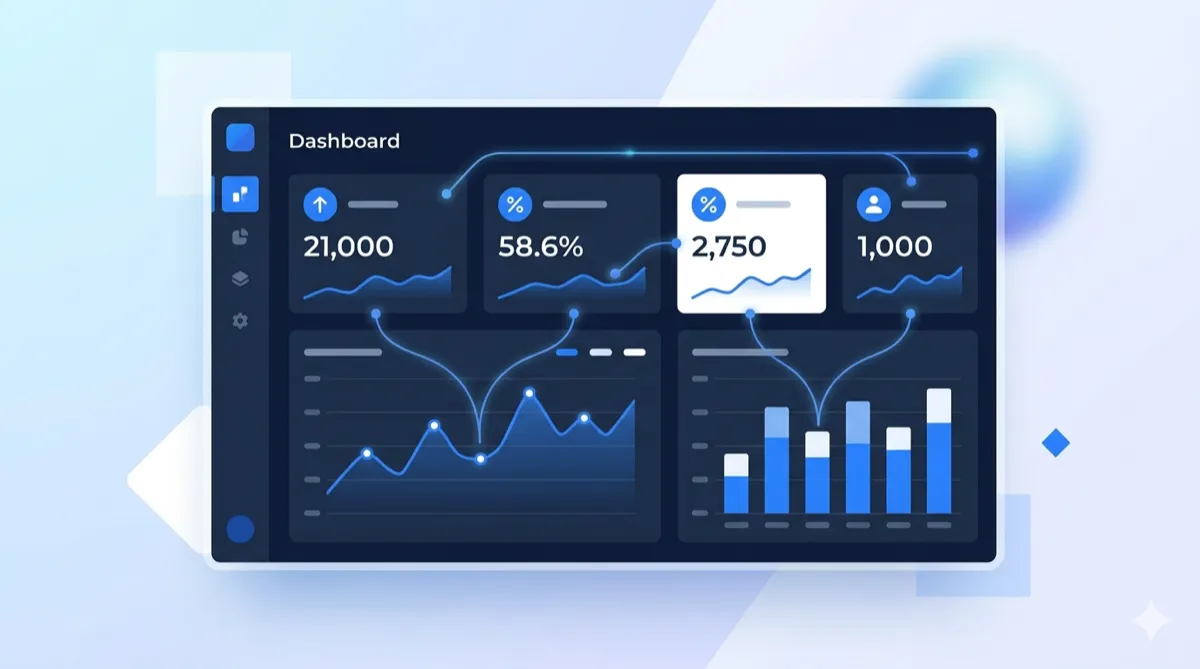
AI and Business Intelligence: a practical guide for SMEs
AI applied to BI is no longer a big-company luxury. Discover 5 concrete applications for SMEs, real costs, and the first step to leverage artificial intelligence in your data analysis.

Excel Data Analysis: When to Switch to BI
Excel is great for starting out, but it has clear limits. Discover when it's time to switch to Business Intelligence and how to do it smoothly in your SME.